
Why So Many Plants Die Despite Good Intentions
There is a particular kind of heartbreak that comes with watching a plant you genuinely care about slowly wither and fade. You watered it. You placed it near a window. You even talked to it. And yet, something went wrong. The leaves turned yellow, the stems went limp, and no matter what you tried, the plant never recovered. If this sounds familiar, you are not alone.
The truth is that most plant deaths are not caused by neglect. They are caused by well-meaning mistakes that quietly damage plants over weeks and months before the visible symptoms ever appear. Overwatering, wrong light placement, poor soil choices, and incorrect fertilising are just a few of the errors that home gardeners and even experienced plant owners make regularly without realising the harm they are causing.
At Bhoomi Nursery, based in Kadiyam, Rajahmundry, we have worked with thousands of plant lovers across Andhra Pradesh over the years. We have seen the same plant care mistakes repeated over and over, and we have helped countless customers rescue struggling plants and rebuild thriving gardens. This blog brings together the most common and most damaging mistakes people make when caring for their plants, and more importantly, exactly how to fix each one before it is too late.
Overwatering Is Killing More Plants Than Anything Else
If there is one single plant care mistake that causes more damage than any other, it is overwatering. Most people assume that more water equals more care and more growth. In reality, overwatering is the number one cause of plant death in both indoor and outdoor settings across India.
When a plant receives more water than its roots can absorb and the soil cannot drain away, the root zone becomes waterlogged. Without adequate oxygen in the soil, roots begin to suffocate and rot. Root rot is a fungal condition that spreads quickly once it takes hold, and by the time the leaves show visible signs of distress, the root system may already be severely damaged.
The signs of overwatering are often misread as signs of thirst. Yellowing leaves, wilting despite moist soil, mushy stems at the base, and a smell of dampness around the pot are all warning signs of too much water, not too little. Many people see a wilting plant and immediately water it more, which accelerates the damage dramatically.
The fix begins with checking the soil before every watering session. Push your finger about two inches into the soil. If it still feels moist, do not water. Only water when the top layer of soil has dried out to that depth. For most indoor plants in Indian conditions, this means watering every two to three days in summer and once every five to seven days in cooler months. Always ensure your pots have drainage holes and that water is never allowed to pool in saucers for extended periods. If you suspect root rot has already set in, remove the plant from its pot, trim away any black or mushy roots, allow the remaining roots to dry briefly, and repot in fresh, well-draining soil.
Placing Plants in the Wrong Light Conditions
Light is food for plants. Without the right amount and quality of light, a plant cannot photosynthesise efficiently, which means it cannot produce the energy it needs to grow, flower, or maintain healthy foliage. Placing plants in the wrong light conditions is one of the most common and most damaging mistakes made in both home and office settings.
The mistake takes two forms. The first is placing sun-loving plants in dim corners or deep inside rooms where natural light barely reaches. These plants slowly become etiolated, which means their stems stretch abnormally toward any available light source, their leaves pale and shrink, and their overall vigour declines. The second form is placing shade-loving plants in direct, harsh sunlight, which scorches their leaves, bleaches their colour, and causes leaf edges to turn brown and crispy.
Understanding the light requirements of each plant before placing it is essential. In Indian homes, windows that face east receive gentle morning sun which is ideal for most flowering plants and many indoor foliage plants. South-facing windows receive the most intense light and suit cacti, succulents, and sun-loving tropicals. North-facing spaces are the darkest and best suited for deep shade plants like peace lilies, pothos, and cast iron plants.
The fix is straightforward but requires honesty about your space. Observe where the sunlight falls in your home or office at different times of day and match your plants to those conditions rather than placing them where they look decorative. If you have a particularly dark interior and want plants, choose species specifically bred or selected for low-light tolerance rather than trying to force a sun-lover to survive in inadequate conditions.
Using the Wrong Soil and Never Repotting
Soil is the foundation of plant health and yet it is one of the most overlooked aspects of plant care. Many people plant or repot their plants using regular garden soil dug from the yard, without understanding that different plants have very different soil requirements and that generic garden soil is often too dense, too poorly draining, and too lacking in nutrients for container-grown plants to thrive.
Dense soil compacts quickly in containers, restricts root growth, reduces drainage, and creates the waterlogged conditions that lead directly to root rot. Soil that is too sandy drains too fast and cannot hold the moisture or nutrients that most plants need. Getting the soil mix right is a foundational decision that affects everything else about plant health.
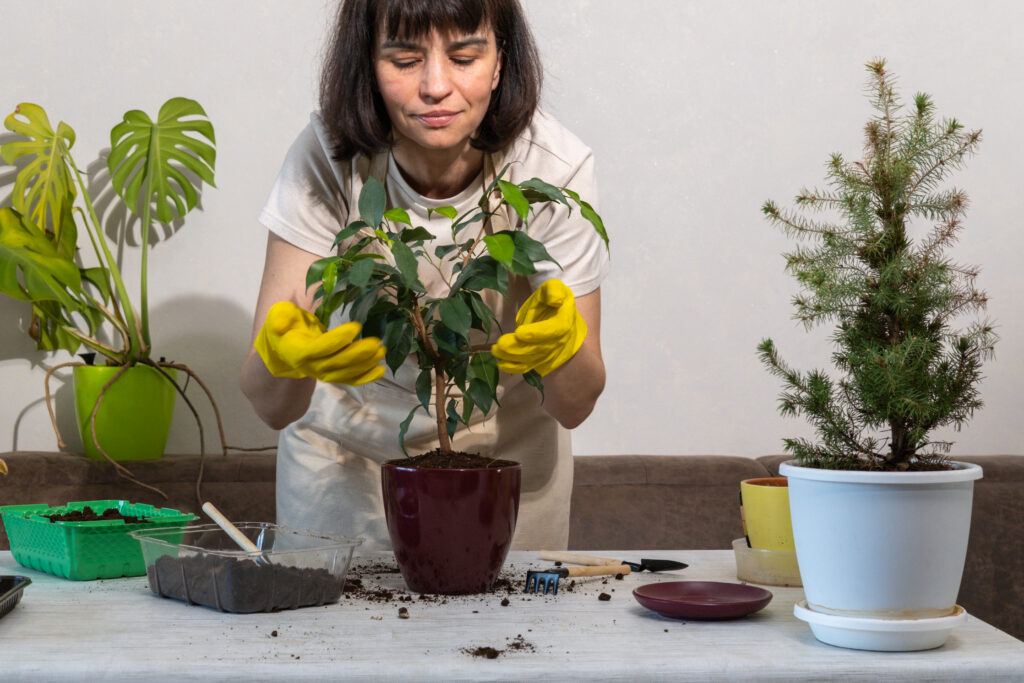
Beyond the initial soil choice, most plant owners make the additional mistake of never repotting. Plants in containers eventually exhaust the nutrients in their soil and outgrow the physical space available to their roots. A rootbound plant, one whose roots have completely filled the pot and begun circling or escaping through drainage holes, is a stressed plant. It cannot take up water or nutrients efficiently, it becomes susceptible to disease, and its growth stalls or reverses.
The fix involves using the right soil mix for each plant type. Succulents and cacti need a very gritty, fast-draining mix. Tropical foliage plants do well in a mix of garden soil, cocopeat, and compost in roughly equal parts. Flowering plants generally benefit from a richer mix with more organic matter. For repotting, a good general rule is to move a plant to a pot that is one size larger, meaning about two inches wider in diameter, whenever you see roots beginning to escape from the drainage holes or growth slowing despite adequate water and light.
At Bhoomi Nursery, we provide guidance on the right soil preparation for every plant we supply, ensuring that our customers start with the best possible foundation for long-term plant health.
Ignoring Seasonal Changes in Plant Needs
Plants are living organisms that respond to seasonal changes in temperature, light levels, humidity, and rainfall. One of the most common plant care mistakes is treating plants as static objects with fixed needs year-round, rather than adjusting care routines as the seasons change.
In Andhra Pradesh, the shift from the intense heat of summer to the monsoon season and then into the cooler dry months creates dramatically different conditions for plants. A watering schedule that works perfectly in December will overwater most plants in January when temperatures drop further and evaporation slows. A fertilising routine applied during active summer growth can cause salt buildup and root burn if continued through the cooler months when plant growth naturally slows.
The fix requires developing an awareness of how your plants are responding to changing conditions and adjusting your care accordingly. During the hot summer months, most plants need more frequent watering, more shade protection for tender species, and benefit from mulching around the base to retain soil moisture. During the monsoon, outdoor plants often need no supplemental watering at all and may actually need improved drainage to prevent waterlogging. During cooler months, watering frequency should be reduced, fertilising should be paused or minimised, and cold-sensitive tropical species should be moved to more sheltered positions.
Checking in with your plants visually every few days and adjusting care based on what you observe rather than following a fixed calendar routine is the single most effective habit you can develop as a plant owner.
Overfertilising in the Belief That More Is Always Better
Fertiliser is not plant food in the way most people understand the term. Plants make their own food through photosynthesis. Fertiliser provides supplemental nutrients that support this process, particularly when plants are growing in containers or in soil that has been depleted over time. But just as too much water kills plants, too much fertiliser causes serious damage through a process called fertiliser burn.
When excess fertiliser salts accumulate in the soil, they draw water out of plant roots through osmosis, causing the tips and edges of leaves to turn brown and dry, wilting, and in severe cases complete root death. Overfertilised plants often look as though they are experiencing drought stress even when the soil is adequately moist.
The fix involves fertilising less frequently and at lower concentrations than most people instinctively feel is necessary. For most container plants in Indian conditions, a balanced slow-release fertiliser applied once every six to eight weeks during the active growing season is sufficient. Liquid fertilisers should always be diluted to at least half the recommended strength, especially for indoor plants. During winter and periods of slow growth, fertilising should be paused entirely. If you suspect overfertilisation has already occurred, flush the soil thoroughly with plain water two or three times in succession to leach out accumulated salts, then allow the plant to recover before any further feeding.
Neglecting Humidity for Tropical Plants Indoors
Andhra Pradesh is a tropical state and many of the most popular indoor plants, including peace lilies, ferns, philodendrons, and anthuriums, are tropical species that naturally grow in high-humidity environments. When these plants are brought indoors, particularly into air-conditioned rooms where humidity levels drop significantly, they begin to struggle in ways that are easy to misdiagnose.
Brown leaf tips and edges, curling leaves, slow growth, and increased susceptibility to spider mites are all classic signs of low humidity stress in tropical indoor plants. Many plant owners see these symptoms and respond by watering more, which usually makes the situation worse rather than better.
The fix is to increase humidity around these plants specifically. Grouping tropical plants together so they share transpired moisture is one effective approach. Placing a shallow tray filled with water and pebbles beneath pots allows water to evaporate gradually and raise humidity in the immediate area without waterlogging the roots. Misting leaves lightly in the morning works for some species, though it should be avoided for plants with velvety or hairy leaves which can develop fungal issues if moisture sits on the leaf surface. Moving humidity-sensitive plants away from direct air conditioning vents makes a significant difference.
Failing to Check for Pests Until the Damage Is Already Severe
Pests are a reality of plant ownership and they are far more common than most plant owners realise. The problem is not that pests exist but that most people do not notice them until the infestation has reached a level where significant damage has already been done. By the time you can see visible pest damage on leaves, the pest population is usually already large and well-established.
Common pests on Indian garden and indoor plants include spider mites, mealybugs, scale insects, aphids, and whitefly. Each of these pests damages plants in different ways but all of them are far easier to manage when caught early than when allowed to multiply unchecked.
The fix is to build a habit of inspecting plants closely at least once a week. Turn leaves over and look at their undersides where most pests prefer to feed and hide. Check the joints where leaves meet stems, which is a favourite hiding spot for mealybugs. Look for fine webbing on leaf undersides which signals spider mites. Sticky residue on leaves or surfaces below a plant often indicates aphids or scale insects.
Early-stage infestations can often be controlled simply by wiping leaves with a damp cloth or spraying with a diluted neem oil solution, which is one of the safest and most effective natural pest controls available. Bhoomi Nursery recommends neem oil as a first response to most common pest issues because it is effective, non-toxic to humans and pets, and gentle enough to use regularly as a preventative measure.
Buying Plants Without Understanding Their Long-Term Needs
Perhaps the most fundamental plant care mistake of all happens before a plant even arrives home. Buying a plant based purely on how it looks in the nursery, without understanding its long-term care requirements, eventual size, light needs, and water demands, sets up both the plant and the owner for frustration.
A beautiful tropical palm that looks stunning in a nursery pot will eventually grow into a large, outdoor tree. A flowering plant that looks perfect in a display requires specific fertilising and pruning to rebloom. An exotic imported species may need humidity levels or temperature ranges that are difficult to maintain in a typical Indian home. Buying any plant without this understanding means you are making a decision based on incomplete information.
The fix is to have a conversation with your nursery team before you buy. At Bhoomi Nursery, our team takes genuine pride in helping customers make plant choices that are right for their specific space, lifestyle, and level of experience. We ask about your home environment, the amount of time you can dedicate to plant care, and what you want the plant to do for your space before we make any recommendation. This approach ensures that the plants you take home are plants that will genuinely thrive in your care, not just survive temporarily before declining.
Healthy Plants Start with the Right Knowledge and the Right Nursery
Every plant care mistake described here is fixable. Every plant that is struggling has a chance at recovery if the right changes are made at the right time. The key is developing the knowledge to recognise what your plants are telling you, the willingness to adjust your habits, and access to quality plants and expert guidance from the beginning.
Bhoomi Nursery has been helping plant lovers across Rajahmundry and Andhra Pradesh grow beautiful, thriving gardens and green spaces for years. Whether you are a first-time plant owner trying to keep your first indoor plant alive or an experienced gardener looking to expand and improve your collection, we are here to help at every stage.
Visit us at NH-16, Canal Road, Burrilanka, Kadiyam, Rajahmundry, or reach us at +91 9491821294. Let Bhoomi Nursery help you build the knowledge, choose the right plants, and create green spaces that genuinely flourish.
The Best Time to Fix a Plant Care Mistake Is Right Now
Plants are remarkably resilient. Given the right conditions and the right care, even a seriously struggling plant can recover and go on to thrive beautifully. The worst thing you can do when you notice something is wrong is to wait and hope it resolves itself. Act early, adjust the care, and give your plants the conditions they actually need rather than the ones you assume they need.
Every great garden, every stunning indoor plant collection, every beautiful green space begins with learning. The mistakes are part of that learning, but they do not have to be permanent. With the right knowledge and the right support from a trusted nursery like Bhoomi Nursery, you can grow plants that do not just survive but genuinely flourish, season after season, year after year.